 whichvitamin.ai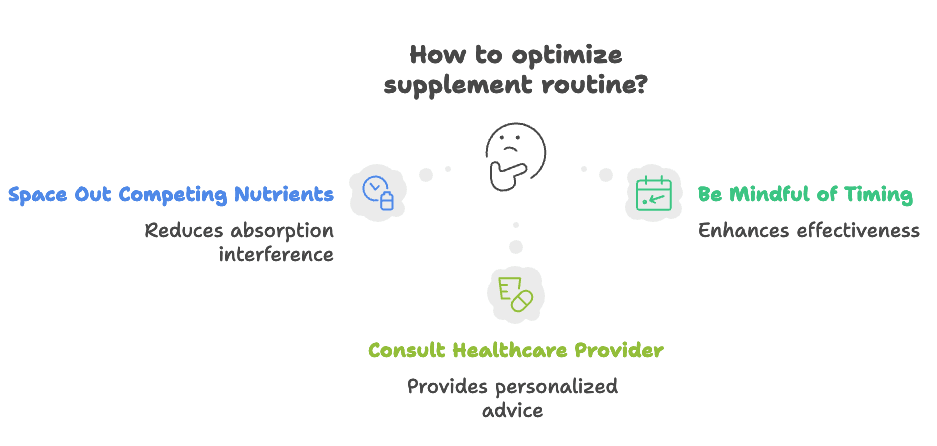
What Supplements Should Not Be Taken Together: The Ultimate Guide for Health Enthusiasts
Are you taking multiple supplements without knowing how they interact? Your health regimen might be working against you!
Introduction
We've all been there—standing in the vitamin aisle, overwhelmed by options, trying to make the best choices for our health. Many of us end up taking multiple supplements daily, believing more is better. But here's the catch: some supplements are like those friends who just don't get along. When taken together, they can cancel each other out or even cause problems.
With 77% of Americans taking dietary supplements, understanding these interactions isn't just helpful—it's essential. This guide will walk you through the most common supplement combinations to avoid, backed by recent scientific research.
Supplement Combinations to Avoid
1. Calcium and Magnesium/Zinc/Iron
Why avoid?
That calcium supplement you're taking for bone health? It might be stealing the spotlight from other crucial minerals. Calcium competes with magnesium, zinc, and iron for absorption in your intestines—and calcium usually wins this battle.
"Mineral competitions in the intestinal tract can significantly impact nutrient status, particularly in individuals with already marginal intake."
What to do instead:
Take calcium supplements at least 2 hours apart from iron, zinc, or magnesium supplements. Consider taking calcium at night and other minerals in the morning.
2. Vitamin C and Vitamin B12
Why avoid?
That morning ritual of washing down your B-complex with orange juice? You might want to rethink it. Vitamin C can actually break down vitamin B12 in your digestive system before your body gets a chance to absorb it.
When you take more than 500 mg of vitamin C alongside B12, you might be unwittingly reducing B12's availability. This is especially problematic for vegetarians and older adults, who already have a higher risk of B12 deficiency.
What to do instead:
Take your B12 supplement at a different time than your vitamin C. For instance, B12 in the morning and vitamin C with lunch or dinner.
3. Vitamin D and Vitamin K
Why avoid?
While these two vitamins don't necessarily fight each other, they need to be in balance. Vitamin D increases how much calcium your body absorbs, while vitamin K directs that calcium where to go—ideally, into your bones rather than your arteries.
Without sufficient vitamin K, all that calcium absorbed thanks to your vitamin D supplement might end up in the wrong places, potentially leading to arterial calcification and cardiovascular issues.
What to do instead:
If you're supplementing with vitamin D (especially high doses), make sure you're getting adequate vitamin K through diet or a combined supplement.
4. Vitamin A and Vitamin D
Why avoid?
These fat-soluble vitamins compete for the same receptor sites in your bones. When you take too much vitamin A (retinol), it can block vitamin D from doing its bone-strengthening job.
High doses of vitamin A (above 10,000 IU) have been linked to a higher risk of fractures—exactly the opposite of what most people taking bone-supporting supplements want!
What to do instead:
Stick to beta-carotene (a precursor to vitamin A) rather than retinol supplements when possible, and keep your vitamin A intake within recommended limits if also taking vitamin D.
5. Iron and Green Tea (or High-Dose Vitamin E)
Why avoid?
That post-breakfast iron supplement with your morning cup of green tea? Unfortunately, you're only getting a fraction of the iron you paid for. Green tea contains tannins and polyphenols that can reduce iron absorption by up to 70%.
Similarly, high doses of vitamin E may interfere with iron metabolism and could potentially contribute to anemia if you're already at risk.
What to do instead:
Take iron supplements on an empty stomach, at least an hour before or two hours after consuming tea, coffee, or vitamin E supplements.
6. Vitamin K and Blood Thinners
Why avoid?
This is one of the most critical interactions to be aware of, especially if you're on prescription medications. Vitamin K plays a crucial role in blood clotting, while medicines like warfarin work by reducing vitamin K activity.
Taking vitamin K supplements (or suddenly increasing your intake of vitamin K-rich foods like kale or spinach) can counteract your medication's effects, potentially increasing your risk of dangerous blood clots.
What to do instead:
If you're on blood thinners, consult your doctor before taking any supplements, especially vitamin K. Maintain a consistent intake of vitamin K from foods rather than dramatically changing your diet.
7. Folate (B9) and Zinc
Why avoid?
While both these nutrients are essential, high levels of folic acid can interfere with zinc absorption. Given that zinc is crucial for immune function, wound healing, and DNA synthesis, this interaction could leave you vulnerable if you're trying to boost both nutrients simultaneously.
What to do instead:
Space out your folate and zinc supplements by a few hours, or work with a healthcare provider to determine appropriate dosages that won't interfere with each other.
8. Vitamin E and Vitamin K
Why avoid?
Vitamin E has mild blood-thinning effects, which can compound with vitamin K's role in blood clotting. Large doses of vitamin E can interfere with normal clotting mechanisms and increase the risk of bleeding—a particular concern for anyone with clotting disorders or taking blood thinners.
What to do instead:
If you need both supplements for specific health reasons, consult with a healthcare provider about appropriate dosing and timing.
Best Practices for Supplement Timing
| Supplement | Best Time to Take | Take With | Avoid Taking With |
|---|---|---|---|
| Calcium | Evening | Food | Iron, Zinc, Magnesium |
Conclusion
Your supplement routine doesn't have to be complicated, but it should be strategic. By understanding which supplements compete for absorption or interfere with each other's functions, you can maximize the benefits of your health investments.